
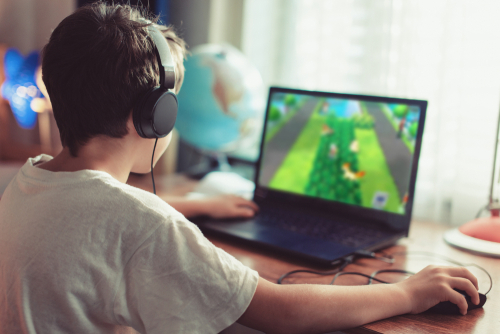
Online gaming is a major part of childhood today. From cooperative building games to competitive sports titles, millions of kids log in daily to play, learn, and socialize. For many families, the question is not whether children will play online games, but whether they will be able to play online in a safe space.
The honest answer is nuanced: online gaming can be safe for kids when game developers and corporations implement strong safeguards and take child safety seriously. Problems tend to arise not because online gaming exists, but because some companies fail to design and enforce systems that protect young users from foreseeable risks.
Why Online Gaming Can Be Safe for Children
When properly designed and managed, online games can offer meaningful benefits for kids, including:
- Social connection with peers
- Teamwork and communication skills
- Creativity and problem-solving
- Moderated spaces tailored to younger users
Many platforms demonstrate that safety is achievable. Features such as age-appropriate servers, restricted chat options, proactive moderation, reporting tools, and parental controls significantly reduce the risk of harmful interactions. When companies invest in these systems and actively enforce or use them, online gaming environments can be both engaging and secure.
In other words, online safety is not accidental. It is the result of deliberate choices made by developers, publishers, and platform operators.
Where Online Safety Breaks Down
When online gaming becomes unsafe for children, it is often because in-game safeguards are incomplete, poorly enforced, or entirely absent.
Common gaming company failures of online safety include:
- Allowing unrestricted chat between adults and children
- Inadequate moderation of user behavior
- Slow or ineffective responses to reports of abuse
- Encouraging children to move conversations off-platform
- Designing systems that prioritize growth or profits over safety
These risks are not hypothetical. They are well-documented across multiple gaming platforms and have led to increased scrutiny of how some companies handle child safety. For example, Roblox Corporation has faced numerous lawsuits lately for allegedly failing to take appropriate steps to stop sexual predators from using its platform to target, groom, and abuse children.
Importantly, these dangers are not inherent to gaming itself. They arise when corporations choose not to implement protections that are both feasible and widely understood within the industry.
Game Developer Responsibilities
Game developers and publishers control the architecture of their gaming platforms. They decide how chat systems work, who can communicate with whom, how reporting systems function, and whether harmful users are removed or allowed to return repeatedly. With that control comes responsibility.
Companies that market games to children, or knowingly allow children to participate in their games, have a duty to anticipate predictable risks, including the presence of predators and abusers. When safeguards are weak, optional, or cosmetic, children may be exposed to harm that could have been prevented through reasonable design and oversight.
Increasingly, parents, regulators, and courts are asking whether some companies have failed to meet that responsibility.
Why Parental Supervision Alone Is Not Enough
Parents play an important role in monitoring their children’s online activity, but supervision cannot replace corporate accountability. No parent can reasonably monitor every interaction in a massive online ecosystem, especially when games are designed to encourage constant engagement, private messaging, and social interaction. Safety systems must function at the platform level, not rely entirely on families to compensate for design flaws.
When companies shift responsibility solely onto parents while continuing to profit from child users, serious questions arise about negligence and accountability.
Has a Gaming Company Done Enough to Protect Children?
Rather than asking, “Is online gaming safe for kids?” a fairer question may be: “Has this company taken meaningful steps to make its game safe for children?”
Some companies can answer yes. Others cannot.
Online gaming does not have to be dangerous to children, but safety depends on whether corporations choose to prioritize protection over profit, moderation over growth at all costs, and accountability over plausible deniability.
When Companies Fail, Families Deserve Answers
As awareness of online groomers and predators grows, more families are speaking out about harm their children experienced in online gaming spaces, often after companies failed to act on warning signs or ignored reports entirely. Online gaming can be safe for kids. When it isn’t, the burden should not fall on families alone.
Hilliard Law proudly represents parents nationwide who believe that a gaming company or related corporation failed to protect their child from foreseeable harm caused by other users. We help parents understand their legal options and pursue accountability when companies fail to uphold their responsibility to protect young users.
Want to talk to a lawyer about potentially taking legal action against a video game developer for putting your child in harm’s way? Call (866) 927-3420 or contact us online now.