
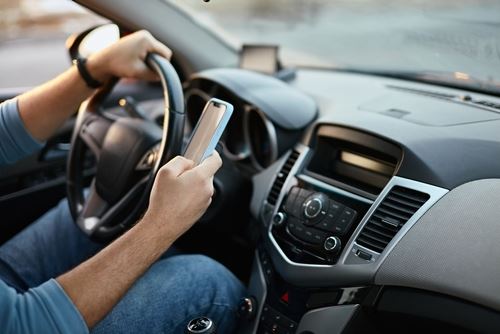
April is Distracted Driving Awareness Month, a national reminder that driver inattention remains one of the most persistent and preventable causes of serious crashes. NHTSA reports that distracted driving killed 3,275 people in 2023, while the National Safety Council notes that distraction-related crashes kill an average of nine people a day.
At Hilliard Law, we have handled many auto accident cases involving distracted driving and other forms of driver negligence.
Our results include a $21.5 million verdict in a distracted driving case in which Mr. Hilliard served as lead trial attorney for a woman injured in a two-vehicle crash caused by a Coca-Cola employee who was talking on her cell phone at the time of the collision.
A record-setting result, the verdict was the largest 2012 jury verdict in the nation for a case involving a back injury requiring surgery, the third-largest motor vehicle verdict in Texas for 2012, and the No. 11 overall verdict in Texas for 2012.
Distracted Driving Is More Than Texting
Texting gets most of the attention, but distracted driving includes many other behaviors that take a driver’s eyes, hands, or attention off the road. NHTSA and the NSC both describe distraction more broadly than phone messaging alone.
That can include:
- Looking at directions or using navigation
- Managing music, podcasts, or other apps
- Eating or drinking
- Reaching for an item inside the vehicle
- Talking to passengers
- Handling calls or notifications
Many drivers do not think of themselves as distracted unless they were actively texting. In reality, serious crashes often happen because a driver looks away for only a few seconds, reacts too late, misses slowing traffic, drifts out of a lane, or fails to see another vehicle, cyclist, or pedestrian in time. Distracted Driving Awareness Month exists because this behavior remains common despite years of public safety campaigns.
Proving Distracted Driving Is Not Always Simple
From a civil standpoint, distracted driving cases are not always as straightforward as a driver admitting, “I was on my phone.” In many cases, proving distraction requires building the story from multiple sources of evidence.
That evidence may include:
- Phone records showing calls, texts, or app activity around the time of the crash
- Vehicle data and crash reconstruction evidence
- Witness statements
- Surveillance or dashcam footage
- Admissions made at the scene or afterward
- Evidence that the driver failed to brake, swerve, or otherwise react normally
This is one reason these cases deserve careful legal review. The absence of an immediate admission does not mean distraction was not involved.
These Crashes Can Cause Lasting Harm
Distracted driving is often described as a momentary lapse, but the harm it causes can be permanent. Victims may suffer traumatic brain injuries, spinal injuries, orthopedic trauma, internal injuries, chronic pain, and other losses that affect daily life for years. In fatal cases, families are left dealing with devastating emotional and financial consequences.
Awareness and Accountability Go Together
Awareness campaigns serve a purpose, but so does accountability. When a distracted driver causes serious harm, a civil claim may be one of the only ways an injured person or grieving family can pursue compensation and force a closer look at what happened.
Depending on the facts, a claim may involve damages for:
- Medical expenses
- Lost income and reduced earning capacity
- Pain and suffering
- Rehabilitation and future care needs
- Wrongful death damages in fatal cases
The legal question is usually straightforward: did the driver fail to use reasonable care, and did that failure cause the crash? The harder part is often proving what happened and fully documenting the harm.
When to Talk to a Lawyer
A legal review may be worth considering if you or a loved one was injured in a crash and there are signs the other driver was using a phone, manipulating apps, eating, handling navigation, or otherwise not paying attention.
That may be especially important when:
- The crash caused serious injury
- Liability is being disputed
- The other driver denies being distracted
- Phone records or digital evidence may need to be preserved
- The insurance company is minimizing the claim
Injured by a Distracted Driver? Hilliard Law Can Help.
Distracted driving is preventable. When a driver chooses to divide their attention and someone gets hurt, that is not just an unfortunate mistake. It may be actionable negligence.
At Hilliard Law, we have handled many motor vehicle injury cases, including many involving texting and other forms of distraction. If you or someone you love was injured in a distracted driving crash, we can evaluate the facts, help identify evidence that may support your claim, and explain your legal options. Call (866) 927-3420 or contact us online for a free and confidential consultation.