
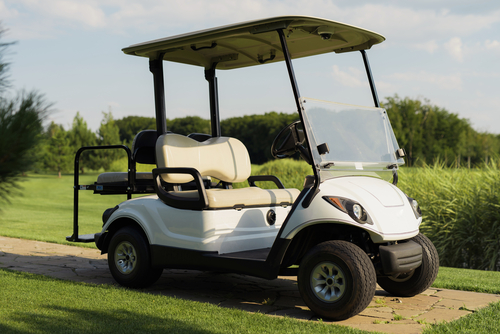
In Texas neighborhoods, retirement communities, lake developments, and beach towns, it is common to see kids behind the wheel of a golf cart, often with younger siblings or friends aboard. Handing a child the keys can feel harmless on a quiet street. When a young driver is involved in a crash, though, the injuries to passengers, pedestrians, or other children can be serious.
A child almost never carries insurance or has assets of their own, so the question of who is responsible usually turns to the adults who owned the cart and allowed the child to drive it. Texas law provides more than one way to hold those adults accountable.
At Hilliard Law, we handle serious injury and wrongful death cases involving golf cart and motor vehicle crashes, including those involving young or unlicensed drivers. These cases often turn on who provided the cart, who was supervising, and what an adult should have foreseen.
Can Kids Legally Drive Golf Carts in Texas?
On public roads, the answer is usually straightforward. A golf cart operator must hold a valid driver's license, so a child under 16 cannot legally drive one on a street, even in a quiet neighborhood. Texas law also makes it illegal for an adult to knowingly allow an unlicensed child under 18 to operate a motor vehicle on a public road.
On private property, including the private streets of some master-planned communities, the public-road licensing rules do not reach the same way, and a younger child driving on a private driveway or lot is not necessarily breaking that law. Many homeowners' associations set their own minimum ages. Legal on private property is not the same as safe, though, and it is not the same as free from liability. An adult who lets a child drive can still be held responsible when the child causes injury.
Why Kids on Golf Carts Get Hurt So Often
Children are injured in golf carts at rates far higher than their share of riders, for reasons that are both physical and practical:
- Most carts have no doors, no seatbelts, and an open frame
- Children are easily ejected during a turn, which can happen at speeds as low as 11 miles per hour
- Kids often ride standing, hanging off the side, or packed in beyond the available seats
- Young drivers lack the experience and judgment to react to a sudden hazard
- Aftermarket speed upgrades make many carts faster than they look
Ejection and rollover are the most common ways children are seriously hurt, and the injuries are frequently head trauma, skull and facial fractures, and broken limbs. Pediatric golf cart injuries have climbed sharply in recent years.
When Parents and Owners Can Be Held Responsible
For an injury caused by a child driver, the most important claims usually run against the adults, under two common-law theories.
- Negligent entrustment. Texas allows an injured person to hold a vehicle's owner responsible for handing it to an unlicensed, incompetent, or reckless driver. The owner must have known or had reason to know the driver was unfit, the driver must have been negligent, and that negligence must have caused the injury. When the driver is an unlicensed child, the owner may have a difficult time disputing that the child was legally unfit to operate the cart on a public road.
- Negligent supervision. A parent or other adult responsible for a child can be liable for failing to reasonably supervise the child's use of the cart, particularly where the danger was foreseeable.
It also helps to know what Texas's parental-responsibility statute does and does not do. Family Code Chapter 41 makes parents liable for certain property damage caused by a child and caps damages for a child's willful and malicious conduct at $25,000. It does not cover personal injury. Claims for the injuries a child causes with a golf cart generally proceed through negligent entrustment and negligent supervision instead, which are not subject to that cap.
Other Parties Who May Share Responsibility
The adults closest to the child are not always the only ones accountable. Depending on the facts:
- An adult who provided the cart or the keys, even a grandparent, neighbor, or party host, may face the same entrustment questions as a parent
- A rental company or resort that handed a cart to an underage or unlicensed driver, skipped inspections between rentals, or failed to explain how to operate it safely, which comes up often in beach and vacation communities
- A homeowners' association or property owner may share responsibility where its rules or a dangerous condition contributed
- The manufacturer may be liable where a design problem, such as a rollover-prone build or rear-facing seats, made the injuries worse
- A negligent motorist who struck the cart may be at fault for the collision itself
Coverage for these claims is often limited, so identifying every responsible adult and every policy that might apply, from a homeowner's or golf cart policy to an umbrella policy, is an important early step.
Hurt Because a Child Was Driving a Golf Cart? Hilliard Law Can Help.
When a child is at the wheel, the at-fault adult is often someone the injured family knows: a relative, a neighbor, or the friend who handed over the keys. Families are sometimes hesitant to ask hard questions for that reason. In most cases, a claim is the way to reach the insurance coverage that exists for exactly these situations, so that an injured child's medical care and long-term needs are paid by a policy rather than out of pocket.
These cases tend to involve more than one responsible adult and more than one possible source of coverage, and an early investigation can be decisive. Details like the cart's condition and any speed modifications, how the child came to be driving, and who was supervising can be hard to reconstruct weeks later.
If your family was hurt in a golf cart crash involving a young driver, our team can help you sort out who may be responsible and what compensation may be available, including in cases of catastrophic injury or wrongful death. Call (866) 927-3420 or contact us online for a free and confidential consultation.