
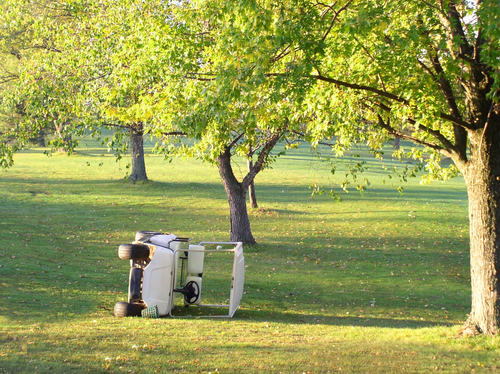
In master-planned communities, lake developments, and retirement neighborhoods across Texas, golf carts have quietly become everyday transportation. Neighbors take them to the pool, the mailbox, or a friend's house down the street, often with kids aboard and rarely with seatbelts. When one of these carts is involved in a crash off the course, the injuries can be far more serious than a low-speed vehicle would suggest.
Away from the fairway, a golf cart on a neighborhood street is treated more like a motor vehicle than a recreational toy. The questions of who is responsible, and whose insurance pays, tend to be more complicated than most families expect.
At Hilliard Law, we handle serious injury and wrongful death cases involving motor vehicle crashes, including collisions and ejections involving golf carts and other low-speed vehicles. These cases often turn on details about how the cart was being used, who owned it, and which policies apply.
Where Golf Carts Can Legally Operate in Texas Neighborhoods
Texas Transportation Code Chapter 551 governs golf carts, and on public roads they are treated as motor vehicles. The rules are stricter than many residents assume:
- A golf cart may be operated in certain approved areas, including qualifying master-planned communities, beaches open to vehicle traffic, and some roads posted at 35 miles per hour or less. Golf carts may also cross higher-speed roads at intersections.
- A Texas golf cart license plate is generally required for public-road use, though qualifying master-planned communities may be treated differently.
- The operator must hold a valid driver's license.
- The cart must carry required equipment, including headlights, taillights, brake lights, reflectors, a parking brake, a mirror, and a slow-moving-vehicle emblem.
Cities can layer on their own restrictions. In Corpus Christi, for example, golf cart and related low-speed vehicle use has been authorized in designated areas such as parts of North Beach, Mustang Island, and North Padre Island, with local rules governing registration, equipment, and operation.
These rules can shape liability. When a cart is driven by an unlicensed teen, run without lights at dusk, or taken onto a road where it does not belong, those violations can become evidence of negligence.
How Neighborhood Golf Cart Crashes Happen
Off the course, the crash patterns look different from a slow tip-over on a fairway. Common neighborhood scenarios include:
- A car striking a golf cart at an intersection or driveway, often because the driver did not expect a slow, low vehicle
- A pedestrian or child struck by a cart in a driveway, cul-de-sac, or parking area
- A passenger ejected during a sharp turn, which can happen at speeds as low as 11 miles per hour
- A rollover on a slope, curb, or uneven ground
- A passenger falling from a moving cart, the single most common cause of golf cart injuries
- A collision with a fixed object, or a cart backing over a small child
Because most golf carts have no doors, no seatbelts, and an open frame, the injuries are frequently severe. They include catastrophic injuries such as traumatic brain injuries and concussions, skull and facial fractures, broken arms and legs, spinal injuries, and in the worst cases wrongful death. Thousands of golf cart injuries are treated in U.S. emergency rooms each year, and children make up a large share of those hurt.
The Insurance Gap That Catches Families Off Guard
The hardest surprise in many neighborhood golf cart cases is coverage. People assume a serious injury will be covered by someone's policy, but golf carts often fall into a gap:
- Standard auto insurance often does not cover golf carts, and many owners need a separate golf cart policy, endorsement, or umbrella policy to fill the gap.
- Homeowner's insurance may cover a golf cart only while it is on the owner's property. Many policies exclude it once the cart moves onto a community road, a public street, or a neighbor's lot.
- An injured person can be left facing an owner or driver who has no applicable coverage at all.
Coverage does exist for owners who buy it, through a dedicated golf cart or low-speed-vehicle policy, a homeowner's endorsement, or an umbrella policy, and some homeowners' associations require it. When the at-fault party carries none of these, an injured person's own auto coverage, including uninsured and underinsured motorist coverage, can become the most important source of recovery. Figuring out which policies apply is often the difference between a covered claim and an empty one.
Who Can Be Held Responsible
Liability depends on how the crash happened and who controlled the cart. Potentially responsible parties include:
- The driver, for careless operation, speeding, overloading the cart, or allowing passengers to ride unsafely
- The cart's owner, who may share responsibility for handing the keys to someone unfit to drive, such as an unlicensed or impaired operator
- A homeowners' association or property owner, where the entity controlled the roads or common areas and a dangerous condition or its own lax rules contributed to the crash
- The manufacturer, where a defect in the cart’s design, brakes, steering, stability, or safety equipment made the crash or injuries worse
- A negligent motorist who struck the cart in a collision
Texas uses a modified comparative fault system, so more than one party can share the blame, and an injured person's recovery is reduced by their own percentage of fault and barred entirely above 50 percent. Owners and insurers often argue the injured person was horsing around, standing while the cart was moving, or riding with too many people, so an early and careful account of what happened can protect the claim.
Evidence That Strengthens a Golf Cart Claim
These cases frequently come down to physical evidence and details that disappear quickly. A cart can be repaired, modified, or sold within days. Evidence worth preserving early includes:
- The cart itself, since its condition, speed capability, and any alterations can be central
- Maintenance and modification records, because lift kits and speed upgrades change how a cart behaves
- Photos of the scene, the cart, and the injuries
- Witness statements from neighbors
- Any community or homeowners' association incident reports and the rules governing cart use
- Medical records documenting the nature and extent of the injuries
Hurt in a Neighborhood Golf Cart Accident? Hilliard Law Can Help.
A golf cart crash away from the course can leave a family facing serious injuries and a tangle of questions about fault and coverage. Identifying every responsible party, and every policy that may apply, can make a real difference in what an injured person recovers.
You may have grounds to pursue a claim if:
- You or your child was ejected or thrown from a golf cart
- A golf cart struck you while you were walking
- A car collided with the golf cart you were riding in
- A defective or modified cart contributed to the injuries
- A loved one was killed in a golf cart accident
At Hilliard Law, we handle serious injury and wrongful death cases involving motor vehicle and golf cart crashes. If you or someone you love was seriously hurt in a neighborhood golf cart accident and have questions about your legal options, call (866) 927-3420 or contact us online for a free and confidential consultation.