
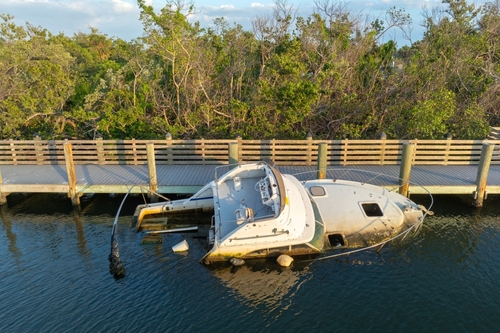
Summer on Texas water means crowded lakes, busy coastal bays, and a lot of inexperienced operators sharing the same space at high speed. When a boat or jet ski crash happens, the injuries are often serious, and the question of who is responsible is rarely as simple as it looks from the dock. A passenger, another boater, a swimmer, or a person on a rented jet ski can all be left badly hurt by someone else's decision on the water.
Pinning down who is responsible for a crash on the water is what our team focuses on, and the answer often reaches past the person at the controls. The owner who lent out a fast boat, a rental company, or another operator in a crowded cove may all share the blame.
How Boat and Jet Ski Accidents Happen
Most serious watercraft crashes trace back to operator error rather than bad luck. The U.S. Coast Guard consistently identifies operator inattention as a leading cause of boating accidents. Common patterns include:
- Operator inattention or failure to keep a proper lookout
- Excessive speed for the conditions or the crowd on the water
- Inexperienced operators who never took a boater education course
- Operating under the influence of alcohol
- Overloading a boat or jet ski beyond its safe capacity
- Riding too close to other vessels, swimmers, or the shore
- Mechanical or steering failure
When the Operator Was Drinking: Texas BWI Law
Alcohol is one of the most dangerous factors in serious watercraft crashes, and Texas Parks and Wildlife warns that the probability of being killed in a boating accident doubles when alcohol is involved. Because of this, Texas treats impaired operation seriously. Operating any vessel, including a jet ski, with a blood alcohol concentration of 0.08 or higher is Boating While Intoxicated under the Texas Penal Code, the same threshold that applies to driving.
Texas has no open container law on the water, so passengers may legally drink, but the person operating the boat is still bound by the 0.08 limit and the requirement to keep the normal use of their faculties. A criminal BWI charge against the operator is a separate matter from your civil injury claim. A conviction can help prove fault, but you do not need one to pursue a claim against an impaired operator who caused your injuries.
Who Can Be Held Responsible for a Watercraft Accident
Liability depends on how the crash happened and who controlled the vessel. Potentially responsible parties include:
- The operator, for inattention, speeding, impairment, or reckless maneuvers
- The boat or jet ski owner, who may share responsibility for handing the controls to an unfit, unlicensed, or impaired person
- A rental company, for renting to an unqualified or underage operator, skipping required safety instruction, or providing a poorly maintained craft or missing life jackets
- The manufacturer, where a defect in the steering, throttle, fuel system, or other component caused or worsened the crash
- Another boater, including one who caused the wake or collision and left the scene
Texas uses a modified comparative fault system, so more than one party can share the blame, and an injured person's recovery is reduced by their own percentage of fault and barred entirely above 50 percent. Operators and insurers often try to shift fault onto the injured person early, so an accurate account of what happened protects the claim.
Jet Skis Come with Their Own Set of Rules
Personal watercraft are involved in a large share of serious water injuries, partly because they are fast, easy to eject from, and have no brakes in the way a car does. Texas law sets specific rules for them, and a violation can become evidence of negligence:
- Every person on or being towed behind a jet ski must wear a Coast Guard-approved life jacket, and inflatable life jackets do not qualify
- If the craft has a lanyard cut-off switch, the operator must keep it attached to their body or clothing
- A person under 13 may operate only under onboard supervision by someone at least 18 who can lawfully operate the vessel
- Jet skis may not be operated between sunset and sunrise
- A jet ski must stay at least 50 feet from other vessels, swimmers, docks, and the shore, except at no-wake speed
- Recklessly jumping another vessel's wake at close range is prohibited
When a jet ski operator ignores one of these rules and someone is hurt, that violation often becomes central to the case.
Does Not Wearing a Life Jacket Affect Your Claim?
This is one of the most common worries injured people raise, and the short answer is that not wearing a life jacket does not automatically bar a claim. Texas requires life jackets in specific situations, including for children under 13 on most vessels and for everyone aboard a jet ski.
Outside those situations, an adult's choice not to wear one is fact-specific. The defense may raise it to argue you contributed to the severity of your injuries, but whether that holds, and how much it affects damages, depends on the circumstances and is worth reviewing with an attorney before assuming the worst.
Reporting Requirements and Deadlines
Texas requires a boating accident to be reported to Texas Parks and Wildlife when it involves a death, a disappearance, an injury that needs more than basic first aid, or significant property damage. Operators are also required to stop and render aid. Beyond the reporting rules, a personal injury or wrongful death claim in Texas is generally subject to a two-year filing deadline, and evidence on the water disappears quickly once vessels are removed, repaired, or sold. Acting early helps preserve both the claim and the proof behind it.
Hurt in a Boat or Jet Ski Accident? Hilliard Law Can Help.
A crash on the water can leave a family facing serious injuries and hard questions about who was at fault and which insurance applies. Identifying every responsible party, from an impaired operator to a careless rental company, can make a real difference in what an injured person recovers.
At Hilliard Law, we handle cases involving boat, jet ski, and other water-related accidents. If you or someone you love was seriously hurt on the water and have questions about your legal options, call (866) 927-3420 or contact us online for a FREE and confidential consultation.