
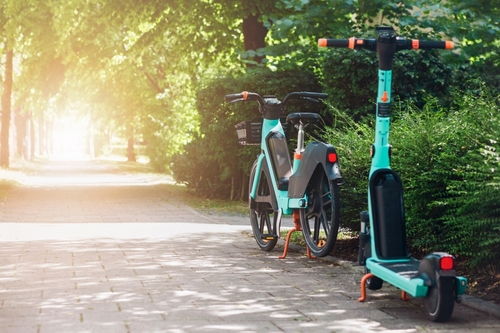
Rental e-bikes from companies like Lime, Bird, and Veo have become a common sight in many cities across Texas, and renting one usually takes just a few taps on your phone. But before you can unlock the bike, you have to agree to lengthy terms of service that include a liability waiver, and many riders assume that click or “e-signature” means they've given up their right to sue if they get into an e-bike accident for one reason or another. Under Texas law, that isn't necessarily true.
What Do You Agree to When You Rent an E-Bike?
Before you can unlock a rental e-bike, you typically must accept a lengthy terms of service agreement that goes far beyond a simple safety disclaimer.
These agreements usually include:
- A liability waiver releasing the company from claims tied to ordinary use of the e-bike.
- A mandatory arbitration clause that moves disputes out of court and into private arbitration.
- A class-action waiver that prevents you from joining other injured riders in a group lawsuit.
- Language naming the manufacturer, city, or property owner as an additional "released party."
- An assumption-of-risk clause acknowledging that riding an e-bike carries inherent dangers.
Are E-Bike Rental Liability Waivers Enforceable in Texas?
Texas law does not treat every liability waiver as ironclad, and rental e-bike companies still must meet specific legal standards for their waivers to hold up in court.
In Texas:
- The waiver must satisfy the state's express negligence doctrine, spelling out in clear language that the company is released from its own negligence.
- The waiver must be conspicuous, meaning the language can't be buried in fine print or vague legal jargon.
- Courts are split on whether a waiver can release a company from gross negligence, so this remains an open legal question that varies by court.
- A waiver cannot excuse intentional misconduct, no matter how it's worded.
Can You Still File a Claim After Signing an E-Bike Rental Waiver?
Signing a rental e-bike's terms of service does not automatically prevent you from pursuing a legal claim if you were injured while using the e-bike.
You may still have a case if:
- The e-bike had a defect, such as faulty brakes or a malfunctioning throttle, giving rise to a product liability claim separate from the rental agreement.
- The company's conduct amounted to gross negligence, such as knowingly deploying e-bikes with unresolved safety recalls.
- The waiver's language was unclear, overly broad, or not presented in a conspicuous way.
- Your injury was caused by another driver, a defective sidewalk, or a third party not addressed by the waiver.
Who Can Be Held Liable in a Texas Rental E-Bike Accident?
A liability waiver with the rental company doesn't necessarily protect every party who may share responsibility for your accident.
Depending on the facts of the e-bike accident, liability may fall on:
- The rental company, for fleet maintenance failures or known defects it failed to address.
- The e-bike manufacturer, if a defective part caused or contributed to the crash.
- A negligent driver who struck you while you were riding.
- A property owner or municipality, depending on the specific waiver language and the circumstances of the accident.
What You Should Do After a Rental E-Bike Accident in Texas
What you do in the aftermath of a rental e-bike accident can affect whether you're able to pursue compensation later.
Try to take these steps if you’re ever hurt while riding a rented e-bike:
- Take photos of the e-bike, the accident scene, and your injuries.
- Report the incident through the app, if possible, and request an incident report number.
- Seek medical attention, even if your injuries seem minor at first.
- Avoid signing any additional documents or accepting a settlement before speaking with an attorney.
- Save a copy of the app's terms of service as it existed on the date of your accident.
Does All This Also Apply to E-Scooter Accidents in Texas?
Rental companies like Lime, Bird, and Veo generally operate their e-scooters under the very same app, terms of service, and liability waiver used for their e-bikes, so nearly everything discussed above applies to a rentable e-scooter accident, too. For example, in cities like Corpus Christi, where rental e-scooters have become a common way to get around, you are statistically more likely to get into an e-scooter accident than an e-bike accident, so it helps to know where your rights as an injured party stand in such a case.
The same core questions apply to e-bike and e-scooter accidents, including:
- The waiver you agreed to likely includes the same liability release, arbitration clause, and class-action waiver.
- Texas's express negligence doctrine and conspicuousness requirements apply the same way to an e-scooter waiver as an e-bike waiver.
- The same exceptions can still apply, including defective equipment, gross negligence, or unclear waiver language.
- The rental company, the scooter's manufacturer, a negligent driver, or a property owner may all be potential parties, depending on how the accident happened.
Whether you were riding an e-bike or standing on an e-scooter when you were hurt, the legal path forward looks largely the same. And you should only walk it with a talented attorney leading the way.
Contact a Texas E-Bike Accident Attorney Today
A liability waiver might look like the end of the conversation, but in Texas, it's often just the beginning of one. Talk to a lawyer right away to see if you could still have a valid claim, even with your signature or e-signature on a waiver form. Hilliard Law and our legal team review rental agreements like these regularly, whether the ride was on a Lime e-bike or a Bird e-scooter, and we know where the fine print does and doesn't hold up in court. If you were injured on a rental e-bike or e-scooter in Texas, call us at (866) 927-3420 or contact us online for a free consultation.
If you were injured on a rental e-bike or e-scooter in Texas, call us at (866) 927-3420 or contact us online for a free consultation.