
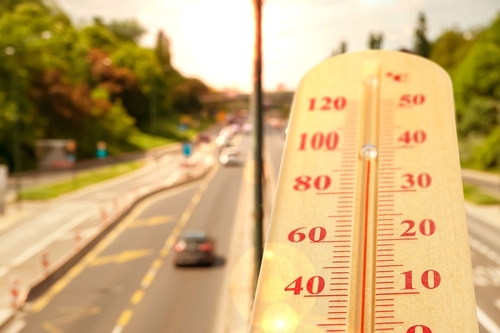
A vehicle can turn deadly for a child far faster than most people expect. On a 70-degree day, the inside of a closed car can climb past 115 degrees, and the temperature rises nearly 20 degrees in the first ten minutes alone. A young child's body heats three to five times faster than an adult's, so what seems like a short delay to an adult can become fatal for a child who cannot leave the vehicle or call for help. When that child was in someone else's care, the question that follows is who the law holds responsible.
When a child is harmed because an adult or an institution failed to account for them, Hilliard Law helps families understand who bears responsibility and what claims they may have.
How Quickly a Hot Vehicle Becomes Dangerous
The danger does not require a scorching afternoon. Researchers who track these deaths have recorded fatalities on days as mild as the high 60s, because sunlight heats a car's interior surfaces and the cabin traps that heat with no way to release it. Cracking the windows changes very little.
For a child, the margin is thinner still. Heatstroke begins when core body temperature reaches about 104 degrees, and it becomes life-threatening at around 107. Because a child's body heats so much faster than an adult's, that threshold can be crossed in a matter of minutes. Nationally, an average of roughly 37 to 38 children die in hot vehicles each year, and most of them are under two years old.
How Texas Law Treats Leaving a Child in a Vehicle
Texas addresses the conduct directly. Under Section 22.10 of the Penal Code, it is a criminal offense to knowingly leave a child younger than seven in a vehicle for more than five minutes without someone at least 14 years old present. On its own, that offense is a Class C misdemeanor carrying a fine.
The consequences grow far more serious once a child is actually harmed. Depending on the circumstances, an adult responsible for the child can face charges for injury to a child or for endangering a child, both of which carry felony exposure. A criminal case, though, is a matter between the state and the accused. It runs separately from any civil claim the family may bring, and a family does not need a criminal conviction, or even criminal charges, to pursue one.
When a Third Party Is Responsible
Public attention tends to focus on parents, but some of these tragedies happen while a child is in the care of someone whose job is to keep them safe. A daycare, preschool, camp, or transport service can lose track of a child, whether the child is left behind on a vehicle after the others unload or slips away to one unnoticed.
Licensed daycares, preschools, summer camps, schools, and the services that transport children all take on a legal duty to supervise the children in their care and to account for every one of them.
That duty tends to be breached in predictable ways:
- A child is left on a daycare or camp van after the other children are unloaded
- Staff fail to perform a head count when children get on or off a vehicle
- A facility is understaffed or disregards required supervision ratios
- A child slips away unnoticed and reaches a parked or running vehicle
A head count when a van empties is a basic, expected safeguard, and skipping it is exactly the kind of failure that leaves a child behind. When a provider's lapse leads to a child's injury or death, that provider can be held civilly liable whether or not anyone is ever criminally charged.
Texas childcare rules also recognize this risk. For certain child-care center vehicles designed to seat eight or more people, state regulations require an electronic child safety alarm. Before disabling the alarm, the driver or a designated employee must verify that every child has been accounted for and physically walk through and visually check the vehicle, including the seats, rows, and interior. When a childcare provider skips those steps, ignores its own transportation procedures, or fails to train staff on them, that failure can become central to a civil claim.
Civil Claims Available to a Family
A family that loses a child this way, or whose child survives with serious injuries, may have civil claims that exist independently of any criminal proceeding. Texas law allows certain close family members to bring a wrongful death claim, and a related survival claim can seek recovery for what the child endured. Together, these claims can pursue compensation for medical and funeral costs and for the loss the family has suffered, and they serve to hold a negligent party accountable for the harm its carelessness caused.
When the Vehicle Itself Is at Issue
Responsibility does not always rest with the caregiver alone. Some newer vehicles and child-transport vehicles use rear-occupant reminders, electronic child safety alarms, or other warning systems. If a required alarm was missing, disabled, poorly maintained, or failed to work as intended, that issue may become part of the investigation. In some cases, a defective product or negligent maintenance claim may need to be reviewed.
When a Child Is Harmed in a Hot Vehicle, Hilliard Law Can Help
When a child is hurt in the care of a daycare, camp, school, or transport service, the family deserves a clear answer about what went wrong and who is accountable. Identifying every responsible party is the first step toward that accountability.
If your child was injured, or you lost a child to vehicular heatstroke because someone else failed to provide the supervision they owed, Hilliard Law can help you understand your legal options. Call (866) 927-3420 or contact us online for a FREE consultation.