
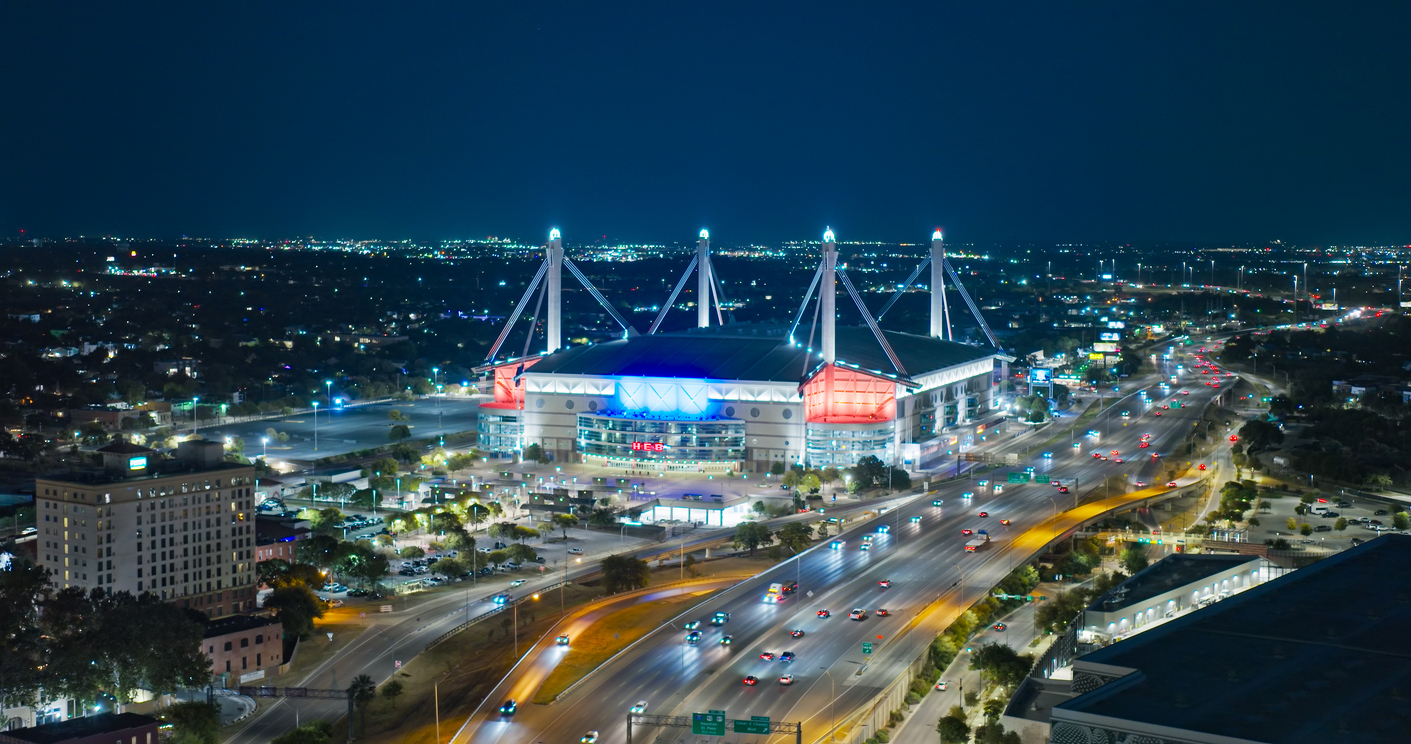
Game-day traffic around large football stadiums can combine tens of thousands of fans, pedestrians crossing busy roads, crowded parking areas, and drivers leaving at the same time. That mix creates car accident risks that differ from ordinary roads.
Stadium traffic arrives and leaves in short bursts, which puts cars, buses, rideshare vehicles, and pedestrians in the same space at the same time. Large Texas venues such as AT&T Stadium in Arlington, NRG Stadium in Houston, and Kyle Field in College Station rely on temporary road closures and event traffic control, and many fans are driving routes they do not know. People on foot often use crosswalks to reach gates or parked cars.
In a University of Florida analysis of campus game days, pedestrian-to-vehicle conflicts increased notably on game days, particularly in the few hours before kickoff. The findings point to conditions such as crowd flow, pedestrian activity, and the emotional pull of a tight game, not to the calendar alone.
Where Crashes and Injuries Happen Around the Stadium
Most game-day injuries outside the stadium cluster in a handful of locations, with increases predictably occurring at the height of the football season.
Common locations around the venue include:
- Parking lots and garages, where drivers circle for spaces and pedestrians walk between rows
- Crosswalks and sidewalks near gates, where crowds spill into the road
- Rideshare pickup and drop-off zones, where vehicles stop suddenly and passengers cross traffic
- Highway exits and frontage roads, where traffic backs up after the final whistle
- Tailgating areas, where vehicles move slowly through groups of people
Staying Safer Before and After the Game
Small planning choices make stadium areas easier to navigate.
Footfall fans can reduce risk by:
- Arriving early and parking in well-lit areas
- Agreeing on a meeting point and a walking route before the game
- Using crosswalks and signals, and carrying a light or wearing bright clothing after dark
- Staying off the phone while walking through lots and crossing streets
- Waiting a few minutes after the game so the heaviest traffic clears
- Arranging a sober driver or rideshare before kickoff if you plan to drink
Drivers have a role to keep everyone safe, too, of course. Slow down near the stadium, expect people in unexpected places, and follow traffic control instructions even when they slow your trip.
Who Can Be Responsible When a Game-Day Crash Causes Injuries
Because many parties shape game-day traffic, responsibility does not always stop with the other driver.
Depending on the facts, responsible parties can include:
- Other drivers who speed, drive distracted, ignore traffic control, or drive impaired
- Venue owners and operators responsible for lighting, signage, pedestrian routes, parking layouts, and security
- Event organizers and traffic-control contractors responsible for staffing, lane closures, and signal plans
- Rideshare drivers and companies when pickups and drop-offs create unsafe situations
Property owners must keep their premises reasonably safe for visitors, and those who plan crowds and traffic must account for foreseeable dangers. Showing that a party fell short takes evidence such as event traffic plans, contracts, surveillance video, and witness accounts, and that evidence is often held by several different companies.
Call Our Texas Accident Attorneys After a Game-Day Crash or Pedestrian Injury
If you were hurt in traffic or a parking area around a football stadium, Hilliard Law can help you understand who may be responsible. Our trial attorneys have spent more than 40 years taking on large companies and insurers, and we’ve worked on many cases with unique and complicated factors, like those involving accidents caused in part by busy parking lots and streets during a busy football game.
Call us at (866) 927-3420 or contact us online for a free consultation about your football season car crash case.